
Dr. Farah Naz
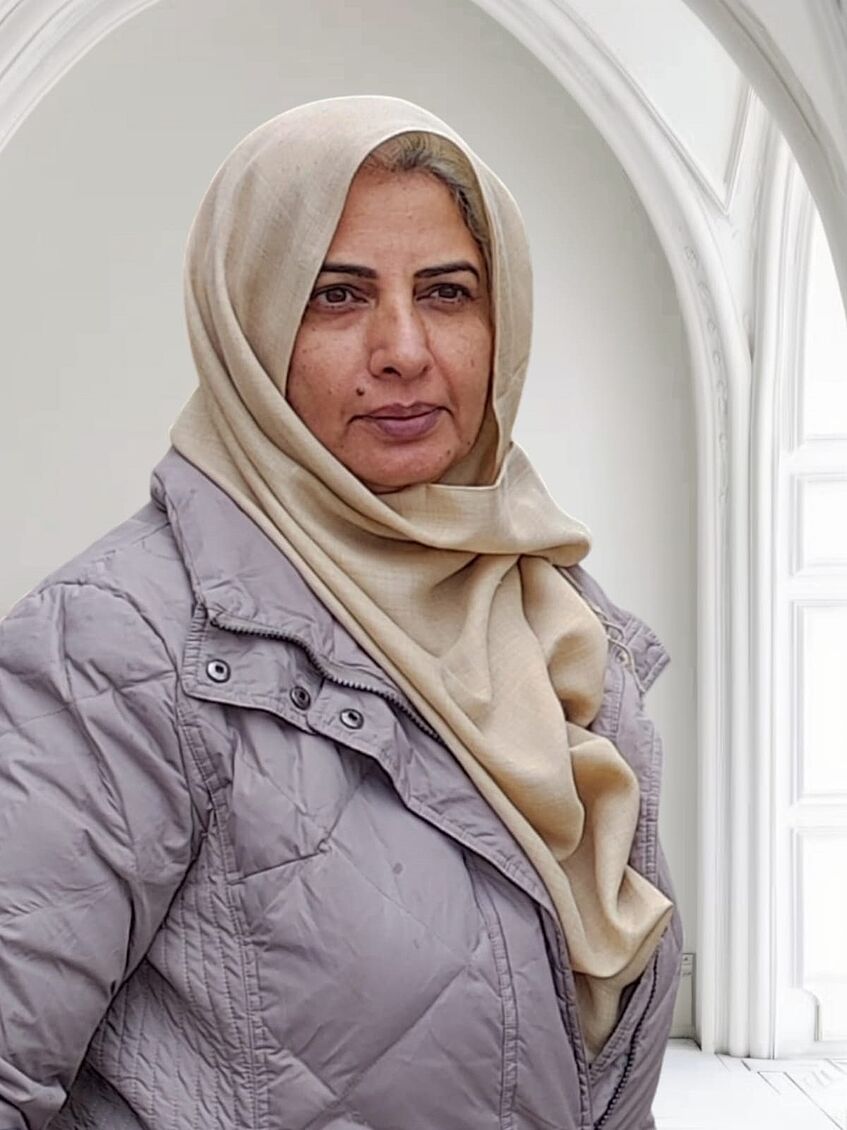
Dr. Farah Naz
Project Staff
Institut für Internationale Entwicklung
Sensengasse 3/2/2
1090 Wien
T: +43-1-4277-64124
M: farah.naz@univie.ac.at
ORCID: https://orcid.org/0000-0002-9790-6233
I am a sociologist, and my research focuses on gender, labor markets, and intersectional postcolonial approaches. I explore how the political economy of global production intersects with gender structures, shaping social, economic, and political systems that marginalize women in the Global South. My interest in gender issues emerged from research on precarious work in global supply chains. Specifically, I examined the impact of corporate social responsibility initiatives and the labor conditions of informal, female home-based workers within global football supply chains. Currently, I am leading a research project titled Decolonizing Knowledge Production and Higher Education, funded by the Elise Richter Program of the Austrian Science Fund (FWF). This project addresses inequalities in higher education and aims to decolonize knowledge production in the Global South, emphasizing the importance of locally grounded and diverse perspectives.
Research Focus
- Sociology of development
- Academic Precarity
- Global Supply Chains
- Knowledge Production
- Epistemic Inequalities
- Postcolonial Feminist Theory
Project Information
Decolonizing the Knowledge Production and Higher Education (DeKnow)
Funded by: Austrian Science Fund (FWF)- The Elise Richter Program
Duration: 2025-2029
Since the introduction of worldwide neoliberal reforms in higher education, the primacy of Anglo-American epistemologies, scientific approaches, languages, categories, and methodologies has been established. As a result, new hierarchies of knowledge production have emerged, re-Westernizing higher education institutions around the world. Individuals and national organisations in the higher education sectors are increasingly “forced” to comply with global norms and standards, which in turn re/produce inequalities between universities and scholars globally, regionally, and locally. However, research has not sufficiently addressed the ways in which global norms and standards are perceived and translated by the diverse actors in their specific local settings. Hence, the aim of the project is to expand scientific debates on the hierarchies of knowledge production in the global higher education sector by also identifying the contextual drivers that produce and reproduce these hierarchies. This will help to explain how hierarchies within the global education sector and knowledge production systems extend beyond the typically discussed North–South divide. However, current debates about decolonising higher education and knowledge production largely ignore the impact of the different local histories and configurations of power in and outside the universities in the Global South. This project aims to investigate how factors such as gender, class, and the geographical positions of academic actors influence their global and local academic standing and contributions to knowledge production. While existing research addresses postcolonial legacies, regional disparities, and class hierarchies in higher education and knowledge production, it overlooks the specific intersections with gender, particularly within local context and gender dynamics. This project seeks to fill this research gap and will foreground the voices of subaltern women scholars, whose voices have hitherto remained marginalized or unheard in Western and even in critical decolonising discourses. Given the colonial history and legacy of the British education system in Pakistan, it becomes an interesting case to examine how neoliberal transformations of universities intersect with local gendered power structures and colonial legacies. This intersection shapes the enduring effects of colonial rules and legacies on the possibilities for decolonizing knowledge production and higher education within existing postcolonial systems. A case study is a particularly useful research design to get an in-depth and contextualised understanding of how the global education system leads to local negotiations regarding the role of scientists and researchers, knowledge production, and possible new mechanisms of exclusion and inclusion due to the local gender order. The research project focus on local contexts and power relations in global hierarchies in the higher education sector to understand and analyse the possibility of deconolonising knowledge production in Pakistan. By applying a gender lens and an intersectional approach, this project explores how social categories such as gender, religion and class, as well as the national, regional, and local positions of academic actors, intersect and influence the academic standing of scholars from Pakistan both globally and locally. It will also examine their contributions to global knowledge production. The most important scientific contribution of the project is to broaden and diversify the ongoing theoretical debates about the globalisation of the higher educational sectors and decolonisation of knowledge production by providing empirical insights from the Global South. Of special significance is the analysis of knowledge production in the field of women’s and gender studies ‘from the margins.’ The research outcomes of the proposed project will not only broaden and diversify theoretical debates and discourses about the global higher education sector and the decolonization of knowledge production but also yield findings that can be used by activists, movements, or scholars to enhance their agency and room for maneuvering within the higher education sector in Pakistan and beyond.